Images have a distinct language machines decode. Image labelling, adding meaning to each pixel, is key. Let's uncover methods enabling AI to understand visuals.
Machine Learning Basics and the Role of Training Data
Machine learning is the driving force behind many AI applications, enabling systems to learn from data and make intelligent decisions. At its core, machine learning involves algorithms that improve their performance over time through experience. The quality and relevance of the training data used to teach these algorithms greatly influence their effectiveness.Supervised learning is one of the most common forms of machine learning. In this approach, algorithms are provided with labelled training data, where the correct answers are already known. The algorithm learns to make predictions or decisions by identifying patterns and relationships within the data.
For machine learning algorithms to generalise well and make accurate predictions on new, unseen data, they need diverse and well-annotated training data. This is where the role of image labelling becomes pivotal. The accuracy of the annotations directly impacts the algorithm's ability to learn the right patterns. Annotators, armed with domain knowledge, ensure that the labelled data accurately represents the real-world scenarios the algorithm will encounter.
Image Labeling and Data Annotation
Image labelling is an integral part of the broader field of data annotation. Data annotation involves labelling various types of data, not just images, to make them understandable and usable by AI algorithms.Image labelling, as a subset of data annotation, focuses specifically on images. Whether it's bounding boxes around objects, keypoint annotations for movement analysis, or semantic segmentation for understanding object boundaries, image labelling enriches the raw visual data with layers of meaning.
Shaping AI's Perception
Image labelling acts as the interpreter that bridges the gap between raw pixels and AI's comprehension. It involves enriching images with labels, providing context and structure to the visual domain. Different annotation types offer distinct capabilities, each contributing to a specific aspect of AI's understanding.Bounding boxes function as virtual frames around objects within images. These rectangular enclosures not only establish an object's location but also serve as the foundation for object detection. Imagine framing a car on a bustling street, enabling AI to independently identify vehicles.
Polygon Annotation is a technique essential for defining the contours of objects with complex shapes. This method proves invaluable when dealing with diverse subjects such as vehicles, animals, or intricate natural formations. By meticulously outlining these objects, AI systems gain a deeper understanding of their intricacies, enabling more accurate and reliable interpretations
Semantic segmentation paints a vivid picture in which each pixel receives a label. This technique empowers AI to differentiate between various regions of an image. Visualize an image of a garden, where AI recognises not just the flowers, but also understands their individual boundaries.
Keypoint annotation involves identifying specific points on an image, allowing AI to grasp poses, structures, and features. It's akin to equipping AI with markers for understanding human or animal anatomy. Envision a ballet dancer's pose, with AI discerning the precise placement of each limb.
Lines and Splines Annotation comes into play for images featuring intricate details like roads, paths, or rivers. Annotators employ this method to highlight lines and curves, indicating the presence and specific contours of these elements.
Real-world scenarios often require a fusion of annotation techniques. For instance, an autonomous vehicle's AI might demand bounding boxes for cars, semantic segmentation for road lanes, and keypoint annotation for pedestrian poses. This blend empowers AI to interpret a diverse array of visual elements. 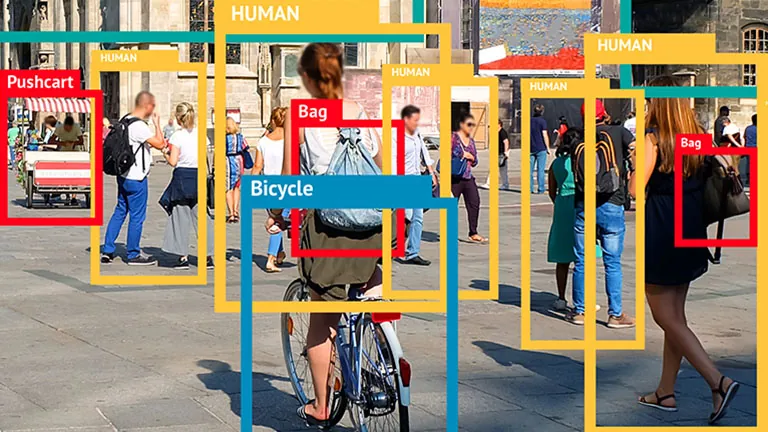
Skillful Hand of an Annotator
Behind every accurately annotated image lies the skilful hand of an annotator. These individuals play a crucial role in the data labelling process, as their meticulous work forms the foundation for training AI models. Let's delve deeper into the world of annotators.Annotators, often armed with domain knowledge such as medical professionals, automotive engineers, agricultural experts, retail specialists, and gaming enthusiasts, bring a human touch to the otherwise algorithmic process of image labelling. Their understanding of objects, context, and intricacies is key to producing high-quality annotated data.
Annotators are trained to recognise and categorise objects accurately, taking into account various factors such as lighting conditions, angles, and occlusions. Their expertise bridges the gap between raw images and comprehensible data for AI algorithms.
Annotators possess a unique blend of skills that make them adept at their task. Attention to detail is paramount – even the smallest nuances can impact the accuracy of annotations. Patience is another virtue, as annotators meticulously work through images to ensure nothing is overlooked. Communication skills are also crucial, as they may need to collaborate with developers or researchers to clarify doubts or provide context. These combined skills contribute to the creation of accurate and reliable labelled data.
Image Labeling Tools
To support annotators in their task, various image labelling tools are used. These tools offer functionalities tailored to different annotation types. For bounding box annotation, tools like Labelbox, CVAT, and VGG Image Annotator (VIA) provide easy-to-use interfaces for drawing precise boxes around objects.For semantic segmentation, tools like COCO Annotator and APEER enable annotators to outline object boundaries accurately. Keypoint annotation tools like LabelMe facilitate marking specific points on images to define object characteristics such as joints or landmarks.
The success of image labelling lies in the harmonious interaction between annotators and tools. Annotators leverage the capabilities of these tools to create accurate annotations, while the tools assist in streamlining the process and maintaining consistency. The iterative feedback loop between annotators and AI researchers ensures that any challenges or uncertainties are addressed, refining the annotation process over time. 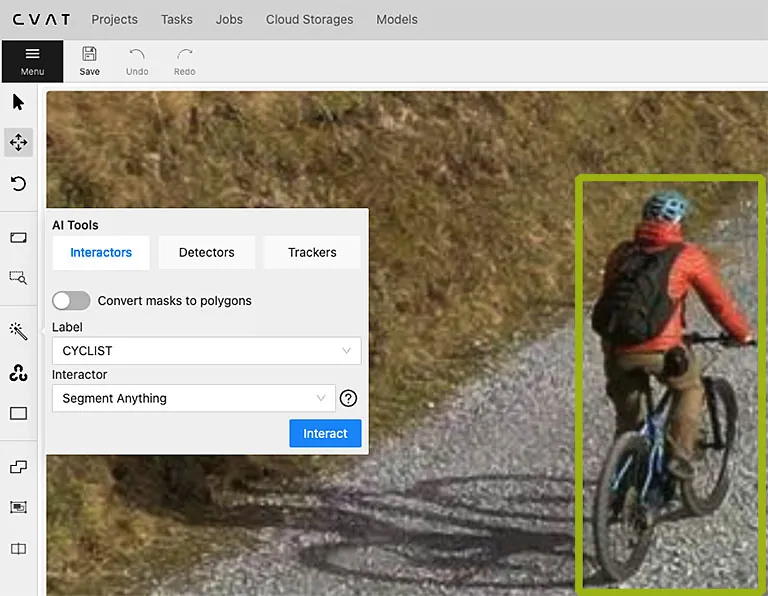
Challenges
Balancing Speed and PrecisionAchieving the delicate balance between speed and accuracy is a central challenge in image labelling. While prompt annotation turnaround is desirable, ensuring that every annotation accurately represents the visual content is equally vital.
Ensuring Consistency
Consistency across annotations, especially in large datasets, poses another hurdle. Variability in labelling styles, even among skilled annotators, can impact the overall quality and reliability of the labelled data.
These challenges underscore the need for streamlined processes, well-defined guidelines, and ongoing training to produce accurate and dependable annotations.
Building Ground Truth Datasets
When we talk about labelled datasets, we're referring to a collection of images that have been annotated with relevant information. These annotations, meticulously crafted by skilled annotators, serve as ground truth, providing the AI model with accurate references to learn from. The quality and accuracy of these annotations are pivotal; they determine how well the AI can generalise and perform on new, unseen data.Once images are annotated, they become an invaluable resource for training machine learning models. These models learn to recognise patterns, features, and relationships within the labelled images. For instance, an AI tasked with identifying pedestrian crossings in images will learn to distinguish the features that define a pedestrian crossing, thanks to meticulously labelled examples.
Annotated datasets don't just serve as training material for a one-time model creation. As new data becomes available, AI models are retrained to adapt to changing circumstances, environments, and scenarios. This iterative process involves refining the existing models using newly annotated images, creating a cycle of ongoing enhancement.
Impact on AI Development
Image labelling has a big impact on AI, shaping how it works and what it can do. This impact can be seen in a few important ways that make AI better and more useful. When we annotate images, we help AI systems learn from them. This makes AI better at understanding what it's looking at. For example, in medicine, labelled images help AI spot things that doctors might miss. The labels teach AI to notice details that are hard for humans to catch.Annotating images doesn't just make AI more accurate, it also helps AI do new things. Think about self-driving cars or drones that can fly over fields. These things become possible because AI learns from annotated images. This opens up a world of opportunities in farming, transportation, and healthcare, making things work better and safer.
Image labelling drives AI to come up with new ideas and ways of doing things. By giving AI annotated images to learn from, scientists and developers can try out new ways of making AI smarter. This helps AI get better and better. For instance, in robotics, good image labelling lets robots do things like picking up objects and moving around without any problems.
Conclusion
Image labelling is not just about drawing boxes or lines around objects; it's a multi-layered process that transforms ordinary images into powerful tools for AI development. Image alabeling serves as the language that elevates pixels into significance, allowing AI to interpret and navigate our visual universe.Through the collaboration of annotators and advanced tools, we unlock AI's potential to see, understand, and revolutionize industries. This intricate interplay between annotators, algorithms, and annotation techniques shapes AI's journey towards visual comprehension.
As AI continues its expansion, image labelling remains the cornerstone that fuels its insights. The journey from raw pixels to high-quality annotated images is what propels AI to new heights of accuracy, efficiency, and innovation.
Video Labeling: Seeing Beyond Pixels
DeeLab, a business unit of Tailjay, serves as a dynamic data annotation hub, connecting skilled annotators with AI projects. Our mission is to offer flexible and agile annotation services, nurturing collaboration with R&D teams and other industry players. Our vision is to drive AI innovation by delivering precise and dependable annotated data for various applications.