The need for labelled audio data in AI and ML has grown, making it necessary to use special methods like classification, segmentation, and transcription. These methods play a key role in making sense of and interpreting complex layers of sound.
Audio Segmentation
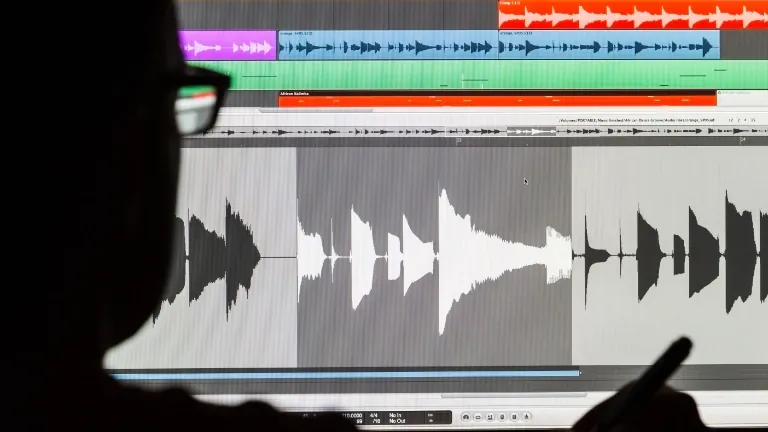
In machine learning, long, unstructured audio files give machines a hard time to process. Audio segmentation plays a key role here. It breaks down audio into smaller, easier-to-handle chunks. This helps machines to analyse specific parts of an audio file instead of dealing with the whole thing. For instance, it can split a podcast into different parts or spot individual speakers in a meeting.The type of segmentation method depends on the audio's nature and the desired result. Speaker segmentation, for example, splits audio based on when different people are talking. This sees frequent use in meeting transcripts and court records. Sentence segmentation, on the other hand, divides audio into sentences. This helps speech recognition systems to transcribe speech more. In today's fast-paced media world, these methods prove essential for content makers who need to edit, transcribe, or reuse long audio files.
The challenge, however, arises when dealing with continuous or overlapping sounds, especially in noisy environments. In such cases, accurately segmenting the audio can become difficult, as there may not be clear markers that distinguish one segment from another. As AI evolves, researchers continue to explore ways to improve segmentation techniques, ensuring they can handle even the most complex soundscapes.
Speech Transcription
Transcription stands out as another common audio labelling technique. It turns spoken words into written text. Many industries need speech transcription, including media, legal services, healthcare, and customer support. We often forget how hard it is for machines to do this job well, even though transcription services are everywhere now.Transcription has two main types: manual and automatic. Human labellers still do the best job when it comes to manual transcription. They listen to the audio and write down what they hear. This method works great for fields that need very accurate results. But it takes a lot of time and money for big projects. AI has made automatic speech recognition (ASR) a faster option. ASR systems can transcribe audio as it plays, which makes them perfect for live captioning or huge transcription jobs. Even though they work fast, ASR systems have trouble in tough situations. Things like background noise, different accents, or people talking over each other can make the transcription less accurate.
The applications of speech transcription are vast and varied. In the legal world, courtrooms rely on transcription services to record spoken testimony, ensuring that every word is accurately captured for future reference. In the healthcare industry, doctors use transcription to convert spoken notes into written patient records, streamlining administrative tasks and improving patient care. While transcription has made significant progress, particularly with the use of AI, there is still much work to be done in enhancing the accuracy and reliability of these systems across different use cases. 
Speaker Identification and Verification
Identifying and verifying speakers have become more crucial ways to label audio now when we care a lot about security and personalisation. When we identify a speaker, we figure out who's talking in an audio file. When we verify a speaker, we check if the voice matches someone we know. These methods play a big role in systems that respond to voice, like virtual helpers or security checks that use your body's unique features.Take voice-based security systems, for example. They use speaker verification to let users in based on their unique voice patterns. This adds extra protection to devices, so users can do things like bank transactions or access private info just by speaking. In the same way personal virtual assistants like Google Home and Amazon Alexa can tell different users apart. This allows them to give personalised answers based on what each person likes.
But these systems run into problems when voices change. Someone's voice might sound different if they're sick, in a certain mood, or in a noisy place. This can throw off even the smartest AI models. Also, background noise or other sounds getting in the way can make it harder to identify and verify speakers. As AI gets better, scientists are trying to fine-tune these systems to make them more accurate and reliable.
Event Detection
Event detection and emotion annotation are modern approaches for annotating audio data, which allow systems to recognise particular sound events or discern emotional signals in a speaker's voice. In the growing field of artificial intelligence, recognising words or sounds is just the beginning.Event detection is widely used in security systems, where AI models are trained to recognise sounds like gunshots, alarms, or breaking glass, triggering real-time alerts for emergency responses. Emotion annotation, on the other hand, is used in customer service settings, where systems analyse speech to detect emotions such as frustration or happiness. This helps companies monitor customer satisfaction and provides valuable insights into customer interactions.
As with other forms of audio labelling, event detection and emotion annotation come with their own set of challenges. Accurately detecting emotions in a speaker’s voice is a subjective task, influenced by factors such as culture, personal experience, and the surrounding environment. Similarly, detecting specific events in noisy or crowded environments requires advanced AI systems capable of filtering out irrelevant sounds.