
Deep Learning is a subfield of Machine Learning, which itself falls under the broader umbrella of Artificial Intelligence. Deep Learning focuses on training artificial neural networks to perform tasks by learning from large amounts of data.
Historical Evolution of Deep Learning
Deep Learning, while capturing headlines in recent years, has a rich history that spans several decades. The foundation for modern Deep Learning was laid by the development of artificial neural networks (ANNs) in the 1940s and 1950s. These early networks, inspired by the brain's neurons, aimed to replicate basic cognitive processes.However, progress in Deep Learning was slow due to limitations in computing power and data availability. The field experienced a period of stagnation known as the AI winter in the 1970s and 1980s, where enthusiasm waned due to unmet expectations.
It wasn't until the late 1990s and early 2000s that Deep Learning experienced a revival. Breakthroughs in training algorithms, such as the backpropagation algorithm, and the availability of larger datasets breathed new life into the field.
The turning point came around 2012, when a breakthrough occurred in image classification. A model called AlexNet won the ImageNet Large Scale Visual Recognition Challenge, dramatically improving the accuracy of image classification by effectively utilising the power of deep neural networks. This event marked the resurgence of Deep Learning, and subsequent years saw remarkable progress, including the development of convolutional neural networks (CNNs) for computer vision and recurrent neural networks (RNNs) for sequential data.
Neural Network Architecture
At the heart of Deep Learning lies the neural network architecture, a sophisticated system composed of interconnected layers that work harmoniously to process and comprehend complex data. This architecture mirrors the human brain's neural connections, albeit in a computational context.Neural networks are composed of layers: an input layer, one or more hidden layers, and an output layer. Each layer comprises nodes, also known as neurons, which process and transmit information:
Input Layer: The entry point for data into the network. This layer receives raw input data, which could be images, text, audio, or any form of structured or unstructured information.
Hidden Layers: These layers lie between the input and output layers and play a pivotal role in extracting intricate features from the input data. Deep Learning models can encompass multiple hidden layers, hence the term "deep." Each hidden layer progressively refines the data representation, allowing the network to capture intricate patterns and relationships.
Output Layer: This layer produces the final output or prediction based on the processed data. The number of nodes in the output layer depends on the nature of the task: binary classification, multi-class classification, regression, etc. 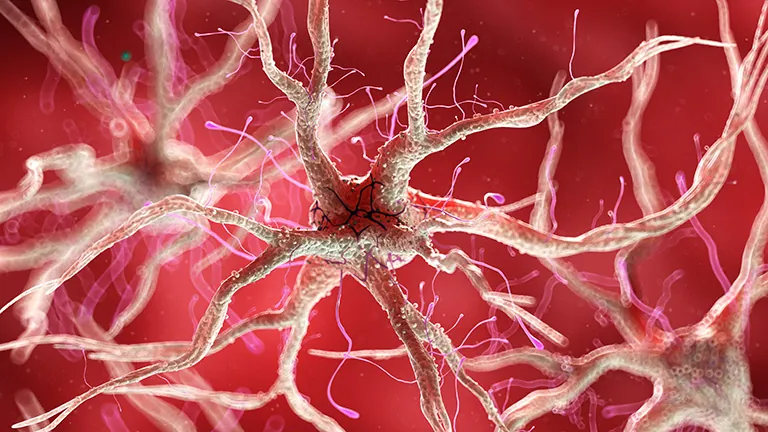
Training Process: Learning from Data
Deep Learning models undergo training using vast datasets containing input data and corresponding target outputs. The training process comprises two primary phases: the forward pass and the backward pass. During the forward pass, data flows through the network, progressing from the input layer through hidden layers to the output layer. The model generates predictions, juxtaposed with actual targets to compute an error.The subsequent phase, known as backpropagation, is where learning takes place. The error traverses backward through the network, prompting the model to adjust neuron weights and biases using optimization algorithms, ultimately minimising the error. This iterative process continues until the model's predictions closely align with the actual targets.
Contrary to the assumption that Deep Learning requires supercomputers, advancements in hardware and software have democratised its accessibility. The availability of open-source frameworks like TensorFlow and PyTorch has made it feasible for individuals to experiment with Deep Learning using their existing hardware. Platforms like Google Colab, Microsoft Azure, and Amazon AWS offer free or pay-as-you-go services that provide access to powerful computing resources, enabling individuals to train models without significant hardware investments.
Real-World Impact and Future Potential
Deep Learning's practical applications come to life through relatable examples that showcase its remarkable capabilities:Image Classification: Imagine a model trained to differentiate between cats and dogs. Deep Learning algorithms proficiently learn features like edges, shapes, and patterns in images, leading to accurate classification.
Language Translation: Deep Learning underpins online translation services, effortlessly converting text between languages. The model comprehends grammar rules, semantics, and context from an array of translated texts, enabling precise translations.
Autonomous Vehicles: Deep Learning plays a pivotal role in enabling self-driving cars to perceive their surroundings. Cameras and sensors gather data, subsequently processed by neural networks to recognise objects, pedestrians, and traffic signals.
Healthcare: Diagnosing Medical Images
Deep Learning has revolutionized the interpretation of medical images. Radiologists once faced challenges in detecting subtle anomalies in X-rays, MRIs, and CT scans. However, with Deep Learning, algorithms can discern intricate patterns that might escape human eyes. For instance, AI-powered systems can identify early signs of diseases like cancer, assisting medical professionals in timely diagnosis and treatment planning.Finance: Detecting Fraud
The financial sector benefits immensely from Deep Learning's predictive prowess. Fraud detection, a critical concern for banks and financial institutions, has been bolstered by Deep Learning algorithms. These systems analyse transaction patterns, identifying deviations and anomalies that could indicate fraudulent activities. By continuously learning from new data, these algorithms enhance their accuracy and adapt to evolving fraud tactics.Entertainment: Powering Recommendation Systems
Deep Learning to create personalised experiences for users. Streaming platforms and online marketplaces utilise recommendation systems to suggest content or products tailored to individual preferences. Deep Learning models process vast user interaction data to discern patterns and preferences, effectively guiding users towards content they're likely to enjoy.Expanding Potential with Advancing Technologies
As computational power and data availability surge, Deep Learning's potential continues to expand. High-performance GPUs and specialised hardware like TPUs have accelerated training times, making it possible to tackle larger and more complex models. This has implications for fields like natural language processing (NLP) and computer vision, enabling advancements like language understanding and accurate object detection.The applications of Deep Learning across healthcare, finance, entertainment, and beyond are just the tip of the iceberg. Its ability to unearth patterns, make predictions, and adapt based on data opens doors to innovations we've yet to fully comprehend. 
Challenges and Ethical Considerations
While the future of Deep Learning holds great promise, it's not without its share of obstacles. The growth of expansive models demands substantial computational resources, giving rise to concerns about energy consumption and its environmental implications.Additionally, the critical task of addressing biases present in both data and models remains essential. This effort to rectify biases is fundamental in establishing fairness and equity within AI systems. As we navigate these challenges, the ethical aspect of Deep Learning plays a central role in shaping its responsible and sustainable integration across diverse sectors.
Conclusion
In essence, Deep Learning's architecture, inspired by neural networks, has evolved significantly since its inception. The journey from early attempts to the modern deep neural networks has been fueled by a combination of algorithmic innovations, increased computational power, and the availability of vast datasets.The beauty of Deep Learning lies not only in its powerful techniques but also in its accessibility. Whether using personal computers, mobile devices, or cloud services, individuals can engage in the process of training deep neural networks. While hardware specifications and training times may vary, the iterative nature of Deep Learning fosters experimentation and learning, enabling enthusiasts and professionals alike to embark on a journey of exploration and innovation.
DeeLab, a business unit of Tailjay, serves as a dynamic data annotation hub, connecting skilled annotators with AI projects. Our mission is to offer flexible and agile annotation services, nurturing collaboration with R&D teams and other industry players. Our vision is to drive AI innovation by delivering precise and dependable annotated data for various applications.