Businesses are adopting automation to boost efficiency and streamline operations, especially in invoicing, where manual processes hinder financial workflows.
Automated Invoice Processing
Automated Invoice Processing simplifies accounts payable by handling invoice processing automatically. It syncs with your ERP system, maintaining digital records efficiently. This system aims to cut down manual invoice processing time significantly and minimise human error.
Here's how the automated invoice processing workflow operates:
- Upon invoice arrival, it undergoes automatic scanning, and its details are seamlessly integrated into the digital accounting system in the preferred format.
- After being recorded in the digital database, the invoice transforms into a text-searchable document, meticulously mapped by the automated management system. This enables active tracking of entered data within the ERP system.
- The stored data encompasses supplier or company name, purchase amount, and supplied goods/services details, ensuring a comprehensive and well-formatted invoice account. This facilitates sharing with relevant parties for payment review and approval.
- Any captured detail failing data validation checks undergoes manual review, while accurately processed invoices proceed to the designated person for approval and payment.
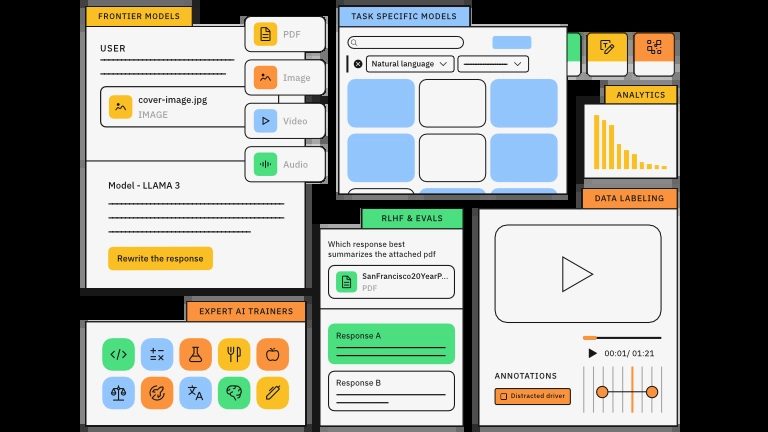
Accurate data labelling approaches are key to any good invoice automation solution. Data labelling is the process of tagging data so that machine learning algorithms can understand its context and meaning.
In the context of invoice automation, data labelling entails tagging essential data inside invoices, such as invoice numbers, dates, line items, and payment information. These annotated data are used to train machine learning models, allowing them to effectively extract and process invoice information with minimum human interaction.
Enhancing Invoice Automation with Data Labeling
Accuracy is crucial in invoice automation as errors can have significant financial impacts and damage client trust. Data labelling trains machine learning models to recognise patterns, extract relevant data, and make informed decisions. This enables automation systems to achieve unprecedented accuracy. By meticulously labelling data, invoice automation providers ensure their solutions consistently deliver precise results, boosting customer satisfaction and fostering long-term relationships.
Data labelling also enhances productivity by reducing the need for human intervention in the billing process. By automating repetitive tasks like data entry and validation, organisations can cut costs and reallocate human resources to more valuable activities. Additionally, automation minimises the risk of human error, speeding up invoice processing and improving the overall efficiency of financial operations.
As organisations grow and transaction volumes increase, scalability becomes crucial for invoice automation. Data labelling is key to enabling scalability, ensuring that systems can handle large volumes of invoices while maintaining accuracy and performance. Flexible and adaptive data labelling pipelines allow invoice automation providers to prepare for future growth and meet evolving customer demands.
Data labelling also drives innovation and continuous improvement in invoice automation. By gathering insights and feedback from automated processes, businesses can enhance the effectiveness of their systems and refine their data labelling techniques over time. This iterative approach helps invoice automation providers stay competitive by adapting to changing market conditions and maintaining their edge in the industry.
Addressing Industry-Specific Challenges
Invoice automation is not a one-size-fits-all solution. Different sectors and businesses have unique invoicing needs, formats, and operations. Data labelling comes as a flexible tool for customising and adapting to various invoice configurations.
Automation solutions can deliver customised experiences that satisfy the high demands of clients in a variety of businesses by properly labelling invoice data based on industry requirements. Whether it's supporting multiple invoice formats, languages, or legal requirements, data labelling ensures that automation solutions fit easily into any company setting.
DeeLab specialises in providing comprehensive data services to help businesses thrive in the digital age. Our expertise spans across precise data annotation, efficient document processing, and insightful web research. We are committed to delivering high-quality solutions tailored to meet the unique needs of each client.
Our Document Processing Services